
Visible varicose veins alone usually do not rule out elective groin hernia repair, but a history of clots, active vein inflammation, reduced mobility, medicines, and the hernia’s urgency can change the plan. You will be able to identify the warning signs, understand when Doppler testing is useful, and prepare for a safer surgical decision.
Key takeaways
- Visible varicose veins do not automatically prevent elective hernia repair.
- Seek assessment if veins are painful, swollen, ulcerated, or linked to prior clots.
- Ask about mobility, bleeding risk, anaesthesia, and venous-thromboembolism prevention.
- Get urgent help for sudden breathlessness, chest pain, or one-sided leg swelling.
When varicose veins make hernia surgery higher risk
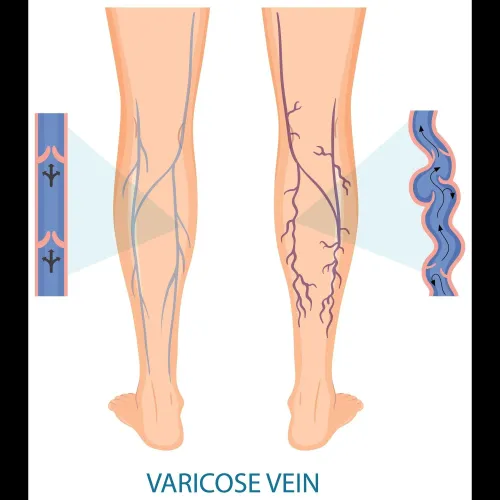
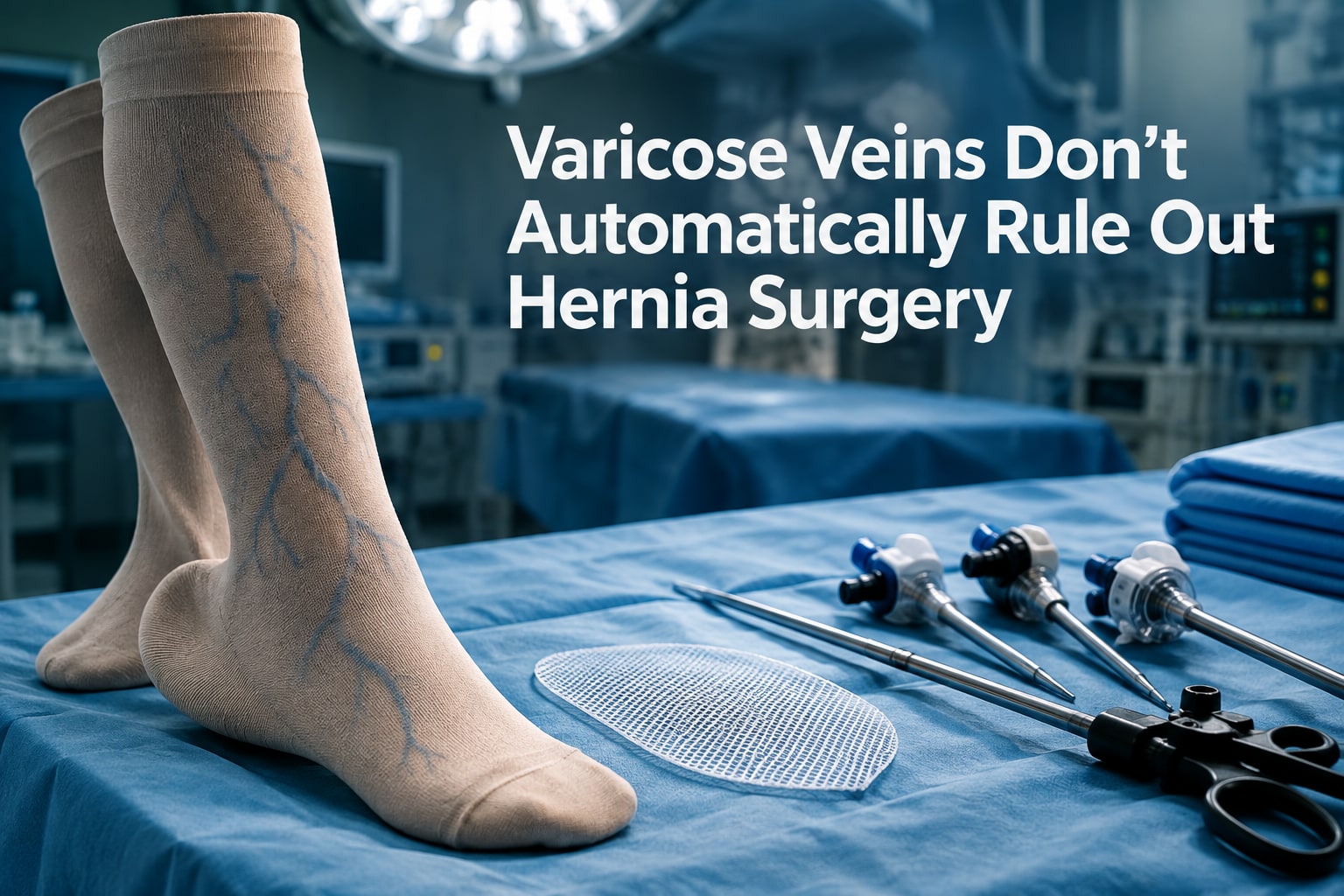
Visible, uncomplicated leg varicose veins are not an automatic reason to avoid elective inguinal hernia repair. Hernia surgery with varicose veins remains a decision based on the hernia, mobility, general health, bleeding risk and venous-thromboembolism risk—not on vein appearance alone.
Varicose veins count as one risk factor in the 2013 Caprini assessment. Disclose them during consultation, but do not assume they require anticoagulant injections. The surgeon and anaesthetist combine this finding with your other risks.
| Finding | Why it matters before elective surgery | What to do |
|---|---|---|
| Previous deep-vein thrombosis or pulmonary embolism | Raises the risk of another clot | Request an individual VTE plan |
| Sudden one-sided swelling, pain, warmth or tenderness | Could indicate acute DVT | Obtain urgent assessment; postpone routine surgery |
| Leg ulcer, bleeding vein, marked swelling or active skin infection | Can impair healing or increase infection risk | Treat and assess the leg before operating |
| Active cancer, obesity, reduced mobility, thrombophilia, hormone therapy or older age | Adds clot risk beyond varicose veins | Review with the surgical and anaesthesia team |
| Anticoagulant or antiplatelet medicine | Stopping it can cause a clot; continuing it can increase bleeding | Never change it without the prescriber’s plan |
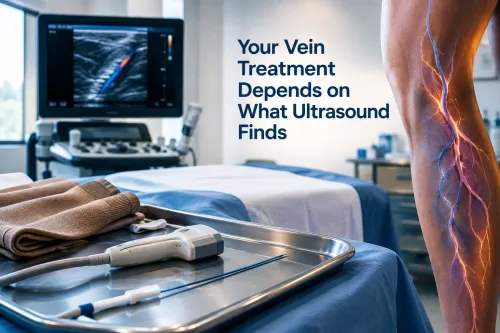
Routine venous ultrasound is unnecessary for visible varicose veins alone. Duplex ultrasound is appropriate for suspected DVT, uncertain venous disease, planned vein treatment, or a groin swelling that could be a saphena varix rather than a hernia.
Do not delay urgent hernia care for varicose-vein treatment. Severe pain, an irreducible lump, vomiting, abdominal swelling, or inability to pass stool or gas can signal obstruction or strangulation. For inguinal hernia surgery with varicose veins in Pune, these symptoms require urgent evaluation.
Is the groin lump a hernia or a vein problem?
A hernia usually produces a groin bulge that becomes clearer when standing, coughing or straining and may reduce when you lie down or press gently. Examination assesses its position, cough impulse, reducibility and whether it extends into the scrotum.
Other lumps behave differently, although a saphena varix can closely imitate a hernia:
- Saphena varix: a soft swelling at the saphenofemoral junction, often linked to visible leg varicose veins. It may enlarge on standing or coughing and disappear when lying down.
- Hydrocele: fluid around the testicle, producing scrotal swelling rather than a groin lump; examination and transillumination can help.
- Enlarged lymph node: usually a firm, discrete lump that does not reduce with lying down or pressure. Look for infection, skin disease or another cause in the leg or genital area.
- Testicular, epididymal or other scrotal lump: remains connected to the testis or scrotal structures and needs a focused scrotal examination.
Venous duplex ultrasound is not routine just because varicose veins are visible. Request it when the clinician cannot confidently distinguish a saphena varix from a hernia, when venous treatment is being considered, or when sudden one-sided leg swelling, pain, warmth or tenderness suggests deep-vein thrombosis.
Suspected thrombosis needs urgent assessment before elective hernia surgery, not routine scheduling.
What the surgeon and anaesthetist must check before surgery
Safety depends on the findings behind the veins, not their visibility alone. During an inguinal hernia consultation in Pune, the surgeon and anaesthetist should assess:
- Previous deep-vein thrombosis, pulmonary embolism, superficial thrombophlebitis, thrombophilia, active cancer, obesity, reduced mobility, age, hormone therapy and previous operations.
- Warfarin, apixaban, rivaroxaban, aspirin, clopidogrel and other medicines; stopping or restarting them requires a plan based on the drug, kidney function, bleeding risk and treatment reason.
- Diabetes control, smoking, anaemia, heart or lung disease, kidney disease, sleep apnoea, allergies and previous anaesthetic problems.
- Leg swelling, skin colour, venous ulcers, active infection, pulses and mobility, plus the hernia’s size, tenderness and reducibility. A sudden swollen painful leg, chest pain, breathlessness, coughing blood, vomiting or an irreducible painful hernia requires urgent assessment, not routine scheduling.
| Finding | Why it matters | Possible planning consequence |
|---|---|---|
| Uncomplicated varicose veins | Count as one Caprini VTE risk factor, not a treatment decision | Early mobilisation or compression; anticoagulant prophylaxis is not automatic |
| Previous DVT or pulmonary embolism | Raises recurrence risk | Individual VTE plan, possibly mechanical and drug prophylaxis |
| Active ulcer, cellulitis or marked one-sided swelling | Increases infection, wound and clot concerns | Treat or investigate before elective repair |
The team balances clotting against bleeding. Depending on that balance, prevention may include intermittent pneumatic compression, early mobilisation, prescribed anticoagulant prophylaxis, or a combination. Scrupulous glucose control, smoking cessation and treatment of skin infection support wound healing.
Should the varicose veins be treated before the hernia?
Uncomplicated varicose veins do not usually need treatment before an elective inguinal hernia repair. The order depends on urgency, venous findings, mobility, previous DVT or pulmonary embolism, bleeding risk, and whether the vein problem itself needs intervention.
| Option | Usual decision | When it applies |
|---|---|---|
| Hernia first | Repair the hernia, then review the veins | The hernia is painful, enlarging, or limiting activity, while the veins have no ulcer, active inflammation, infection, or suspected clot |
| Veins first | Treat venous disease before elective hernia repair | A venous ulcer, active superficial thrombophlebitis, severe symptoms, or planned vein procedure needs attention and the hernia is stable |
| Separate staged treatment | Plan each operation after recovery and reassessment | Both conditions need treatment, or limited mobility and clot risk make combined procedures unsuitable |
| Urgent hernia treatment | Do not delay for vein treatment | The hernia is painful and irreducible, or vomiting, abdominal swelling, or inability to pass stool or gas suggests obstruction or strangulation |
Varicose veins alone do not decide between open anterior repair and laparoscopic posterior repair. The surgeon weighs a unilateral or bilateral hernia, a first or recurrent repair, anaesthetic fitness, previous operations, expertise, and your preference; laparoscopy is not automatically safer because veins are visible.
For hernia surgery suitability in Pune, ask whether the plan includes medication review, Caprini VTE assessment, and a clear strategy for walking and clot prevention. Pawar Surgical Hospital -Premier Surgical care center for gastroenerology, general surgery, laparoscopy, Urology and Gyenacology can assess both conditions when deciding whether staging is safer.
Related product
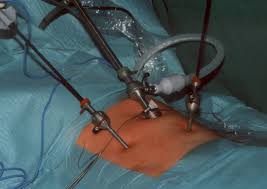 | Laparoscopic proline mesh repair Inguinal Hernia Surgery Inguinal hernia is a common condition which presents with inguinoscrotal swelling. |
How to reduce clot risk and recognise an emergency after repair
Walk as soon as your surgical team permits, then repeat short walks throughout the day. Avoid prolonged sitting, drink normally unless you have a fluid restriction, and use compression stockings or prescribed VTE medication exactly as instructed. Do not stop or restart anticoagulants independently.
- Keep the wound clean and dry according to your discharge instructions.
- Avoid lifting, straining, or vigorous exercise until your surgeon confirms it is safe.
- Take pain relief as prescribed so pain does not prevent movement.
- Attend follow-up, and report worsening leg swelling before the appointment.
| Finding | Possible problem | What to do |
|---|---|---|
| New one-sided calf or thigh swelling, warmth, redness, pain, or tenderness | Deep-vein thrombosis (DVT) | Seek urgent medical assessment; do not massage the leg or wait for routine review. |
| Sudden breathlessness, chest pain worse with breathing, coughing blood, fainting, or rapid heartbeat | Pulmonary embolism | Call emergency services immediately. |
| Rapidly enlarging groin swelling, severe pain, persistent bleeding, dizziness, or faintness | Bleeding or haematoma | Apply firm pressure to external bleeding and obtain emergency care. |
| Increasing redness, heat, swelling, pus, wound separation, or fever | Wound infection | Contact your surgical team promptly; seek urgent care if you feel severely unwell. |
| Repeated vomiting, abdominal distension, or inability to pass stool or gas | Bowel obstruction or strangulation | Go to an emergency department immediately. |
| A new or enlarging bulge, escalating groin pain, or a lump that will not reduce | Recurrent or trapped hernia | Stop straining and seek urgent surgical evaluation. |
Frequently asked questions
Are varicose veins a reason to avoid inguinal hernia surgery?
No. Visible, uncomplicated varicose veins are not an automatic reason to avoid repair. The decision depends on the hernia, mobility, general health, bleeding risk, and venous-thromboembolism risk.
How can you tell whether a groin lump is a hernia or a vein problem?
A surgeon should examine the lump while you stand, cough, and lie down. Ultrasound may help distinguish a hernia from enlarged veins or another groin mass.
What should the surgeon and anaesthetist check before repair?
They should review previous clots, vein inflammation, ulcers, swelling, walking ability, medicines such as anticoagulants, bleeding history, heart and lung conditions, and the planned anaesthetic.
Should varicose veins be treated before inguinal hernia surgery?
Not automatically. Treat the veins first when they involve active inflammation, ulceration, significant swelling, a recent clot, or another condition that changes surgical or clot risk.
How can you reduce clot risk after hernia repair?
Follow the mobility plan, walk as soon as your clinical team allows, use prescribed compression or medication correctly, stay hydrated, and attend follow-up.