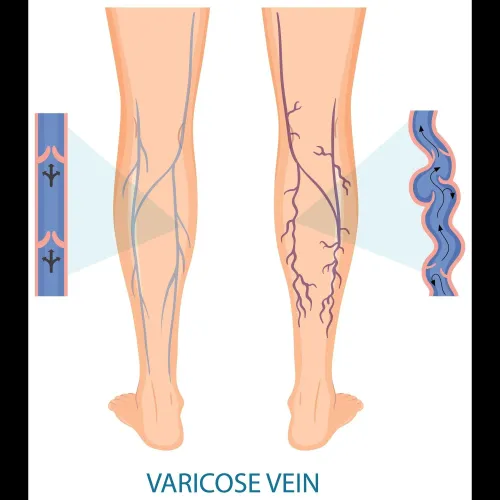

Varicose-vein treatment is not one standard operation: the correct approach depends on whether duplex ultrasound finds superficial reflux, deep-vein disease, thrombosis, or another cause of your symptoms. By the end, you will know what happens at consultation, how treatment choices are made, how the procedure is performed, and what preparation and recovery involve.
Key takeaways
- Bring your medicine list and history of clots, ulcers, pregnancies, and previous vein treatment.
- Ask whether duplex ultrasound shows reflux, obstruction, or deep-vein involvement.
- Compare stockings, ablation, sclerotherapy, and surgery against your symptoms and scan findings.
- Seek urgent help for sudden leg swelling, chest pain, breathlessness, or uncontrolled vein bleeding.
What happens at a varicose-vein surgery consultation and ultrasound assessment?
A varicose-vein surgery consultation in Pune begins with your symptoms and their duration: pain, heaviness, itching, swelling, skin darkening or hardening, bleeding, and ulceration. Tell the surgeon about previous deep-vein thrombosis, thrombophlebitis, ulcers, pregnancies, operations, allergies, and every medicine, including blood thinners and herbal products.
The appointment usually covers:
- Examination while standing, when vein bulging and swelling are easier to see. The clinician may record CEAP: C0, no visible signs; C1, thread or reticular veins; C2, varicose veins; C3, oedema; C4, skin changes; C5, a healed ulcer; C6, an active ulcer.
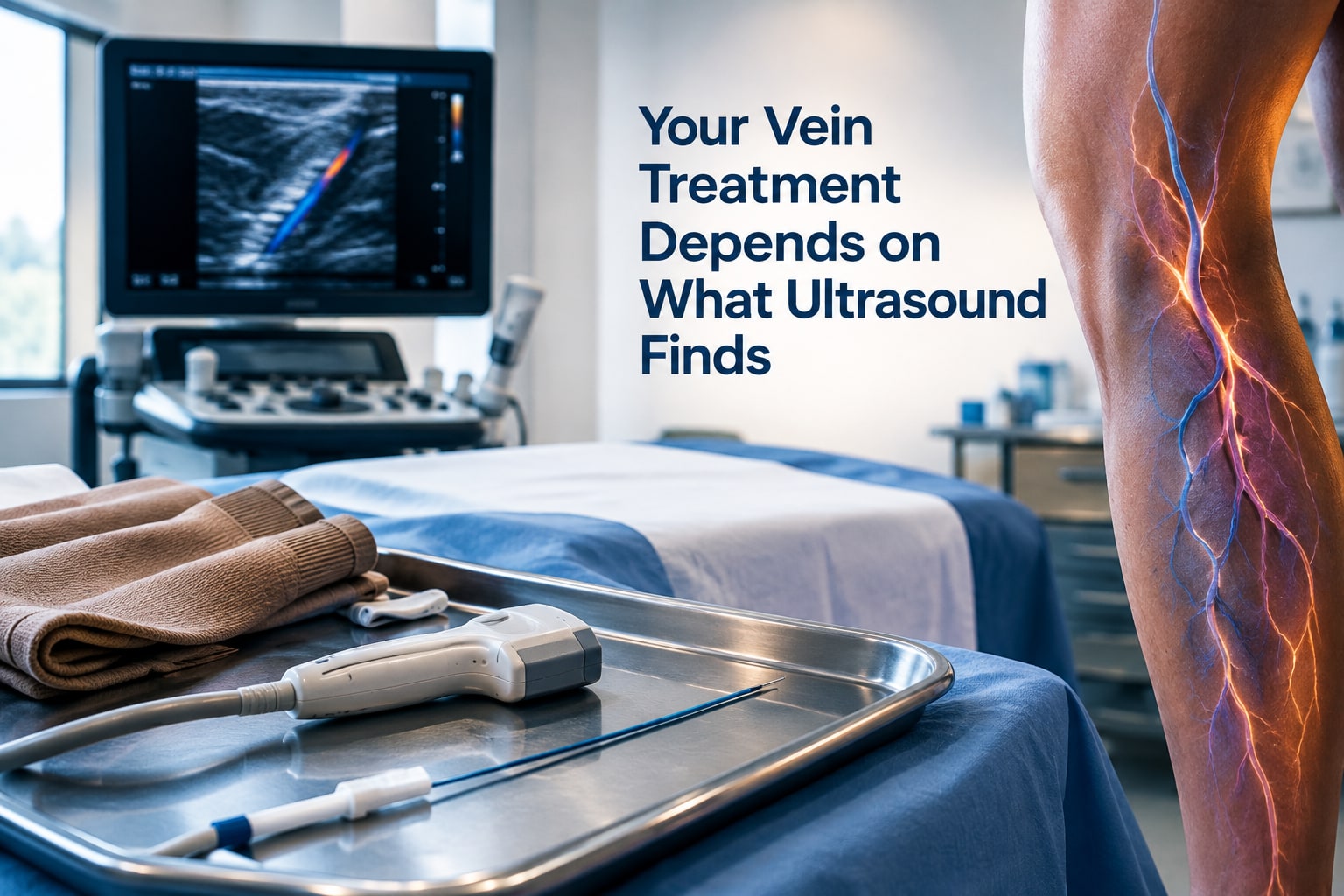
- Duplex ultrasound, the key test before treatment. It maps superficial and deep veins, measures blood flow, identifies backward flow (reflux) and its duration, checks for obstruction or thrombosis, and identifies the target vein.
- Treatment planning based on the refluxing vein, deep-vein function, skin condition, ulcer history, previous treatment, and your preferences. The discussion may include observation, compression, ablation, sclerotherapy, or surgery; the scan prevents treating the wrong vein.
Sudden one-sided swelling or pain needs urgent assessment for deep-vein thrombosis, not a routine appointment. Chest pain or breathlessness may indicate pulmonary embolism and requires emergency care. Bleeding varicose veins, worsening ulcers, or rapidly changing skin also warrant prompt medical review.
How does a general surgeon choose between stockings, ablation, sclerotherapy and surgery?
General surgery for varicose veins in Pune does not mean one fixed operation. If duplex ultrasound finds no intervention target, observation, walking, leg elevation, weight management and symptom relief may be enough. Compression stockings can reduce aching and swelling, but they are not definitive treatment when suitable intervention is available.
| Option | What it involves | When it applies |
|---|---|---|
| Endovenous laser or radiofrequency ablation | Ultrasound-guided thermal closure of the refluxing truncal vein from inside | First choice for confirmed truncal reflux requiring intervention |
| Ultrasound-guided foam sclerotherapy | Foam injected into the vein to close it without thermal energy | When thermal ablation is unsuitable; treatment may need staging or repetition |
| Open high ligation and stripping | Tying the vein at the saphenofemoral or saphenopopliteal junction and removing it | When catheter treatment and foam do not fit the anatomy or clinical situation |
| Ambulatory phlebectomy | Removing prominent tributaries through small skin punctures | For visible side branches, often alongside treatment of the refluxing trunk |
The decision depends on reflux location, vein diameter and anatomy, deep-vein function, skin changes, ulcers, previous treatment, pregnancy, medicines and your preferences. A surgeon also checks whether symptoms arise from superficial reflux, deep-vein disease, thrombosis or another cause. Foam may require staged or repeat treatment, so ask whether one session is realistic.
What happens on the day of minimally invasive or open vein surgery?
Admission begins with identity checks, allergy review, medication confirmation, consent review, and comparison of the planned procedure with your duplex-ultrasound map. The surgeon marks target veins while you stand or uses ultrasound to mark them accurately after you lie down.
- Anaesthesia is given according to the technique: local anaesthesia, sedation, regional anaesthesia, or general anaesthesia. The leg is cleaned with antiseptic and covered with sterile drapes.
- For laser or radiofrequency ablation, ultrasound guides a catheter into the refluxing vein. Tumescent local anaesthetic is injected around it, cushioning nearby tissue and reducing pain and heat exposure.
- Thermal energy closes the vein from inside. Blood then returns through other functioning veins rather than the sealed refluxing channel.
- For foam sclerotherapy, ultrasound guides a needle into the target vein, and injected sclerosant irritates and closes its lining. Several veins or sessions may be needed.
- Open surgery uses a groin or knee incision to tie the incompetent vein at the saphenofemoral or saphenopopliteal junction, then removes it with a stripper. Phlebectomy may remove prominent tributaries through small additional openings.
| Option | Incision and bruising | Nerve and anaesthesia considerations | Recovery and discharge |
|---|---|---|---|
| Minimally invasive | Punctures; usually less bruising | Less exposure to nearby nerves; often local anaesthesia | Small dressings; frequently same-day discharge |
| Open ligation and stripping | Larger incisions; more bruising | Greater sensory-nerve exposure; sedation, regional, or general anaesthesia may be needed | Larger dressings; discharge depends on observation and mobility |
Recovery differs by vein anatomy, technique, and health, so your team should give specific walking, dressing, and escort instructions.
How should you prepare, and what is recovery like after the procedure?
Prepare by giving the surgical team a complete medication and health history, then follow the discharge plan rather than treating recovery as bed rest.
1. Tell the team about aspirin, warfarin, apixaban, rivaroxaban, clopidogrel, herbal products, allergies, pregnancy or possible pregnancy, and any previous anaesthesia problem. Never stop a blood thinner unless the prescribing clinician or surgeon gives explicit instructions.
2. If sedation or general anaesthesia is planned, follow the stated fasting period exactly. Wear loose clothing, arrange an adult to take you home when required, and ask when you may eat, drink, and take regular medicines.
3. Walk for short periods on the treatment day unless instructed otherwise. Use compression stockings or bandages according to the procedure and keep dressings and puncture sites dry for the advised period. Confirm when bathing is allowed; do not soak wounds until permitted.
4. Drive only when you can brake safely, are not taking sedating pain medicine, and the treating team permits it. Ask when you can return to desk work or standing work, climb stairs, exercise, and lift weights. Most plans favour gentle walking over prolonged bed rest.
5. Expect bruising, soreness, tightness, swelling, temporary numbness, or tender cord-like areas. Their duration varies with the technique and your healing. Arrange the scheduled clinical review or duplex ultrasound to check the treated veins and address persistent symptoms.
How do you compare a varicose-vein surgery plan in Pune and know when to seek help?
A credible plan identifies the vein, technique, recovery limits and safety-net—not merely a promise to remove veins. Ask a general surgeon for varicose veins in Pune:
- Who will perform the procedure, and is duplex ultrasound available?
- Which vein shows reflux, and what did the scan find in the deep veins?
- Why does this technique fit your anatomy, vein diameter and symptoms?
- What anaesthesia is planned?
- Could treatment be staged or repeated?
- Which compression garment, walking schedule and wound instructions apply?
- When can you return to work, drive and exercise?
- Who arranges clinical review or follow-up duplex ultrasound?
| Plan element | Question to compare | Why it matters |
|---|---|---|
| Technique | Ablation, foam, phlebectomy or open surgery? | Anatomy and reflux location determine suitability |
| Nerve risk | For below-knee saphenous or small-saphenous treatment, which sensory nerve is nearby? | Ask about numbness, tingling or lasting altered sensation |
| Recovery | Compression, walking, work and exercise dates? | Vague restrictions create avoidable setbacks |
Discuss infection, bleeding or haematoma, nerve injury, skin burn or pigmentation, superficial thrombophlebitis, deep-vein thrombosis and pulmonary embolism. Treating one refluxing vein does not prevent new veins or guarantee every symptom disappears.
At Pawar Surgical Hospital -Premier Surgical care center for gastroenerology, general surgery, laparoscopy, Urology and Gyenacology, use surgical planning to ask these procedure-specific questions rather than assume a guaranteed result.
Seek urgent help for uncontrolled bleeding, worsening ulceration, sudden swelling, chest pain or breathlessness.
Related products
Hernia Hydrocoele Abscees Diabetic foot Varicose vein Breast surgery Thyroid surgery Treatment for burns Cyst View product → |
 | Surgery Gynecology Many females start suffering from excessive P/V bleeding due to various reasons. |
Frequently asked questions
What happens during a varicose-vein surgery consultation in Pune?
The surgeon reviews pain, heaviness, swelling, skin changes, bleeding, ulcers, clot history, medicines, and allergies, then examines your legs and usually arranges duplex ultrasound.
How does a surgeon choose between stockings, ablation, sclerotherapy, and surgery?
The choice depends on symptoms, vein reflux, vein size and location, skin damage, clot history, and whether superficial or deeper veins are affected.
What happens on the day of varicose-vein surgery?
After preoperative checks and marking the treated veins, minimally invasive procedures use ultrasound guidance and small punctures; open surgery uses incisions to tie off or remove the affected vein.
How should you prepare for varicose-vein surgery, and what is recovery like?
Follow instructions about fasting and medicines, arrange transport, wear loose clothing, and expect walking soon after treatment with compression and activity limits tailored to the procedure.
When should you seek urgent help after varicose-vein treatment?
Seek urgent care for sudden leg swelling, severe pain, chest pain, breathlessness, fainting, fever, heavy bleeding, or a cold or pale foot.
Related items
 | Nissan's Fundoplication Appendectomy, Cholecystectomy, Inguinal Hernia, Incisional Hernia, Hiatus Hernia, Hysterectomy, ectopic pregnancy, ovarian tumors, PCOD, Diagnostic... View product → |
 | Endoscopy Gastroscopy Best Gastroscopy center in hadapsar. Gastroscopy done for following symptoms. |
Anorectal Surgeries Piles laser surgeries Stapler surgery for piles Fistula in ano surgeries Surgery for fissure in ano Surgery for peranal abscess Rectal polyp... |
 | Surgery Surgeries for congenital as well as adult type inguinal hernia, incisional hernia and hiatus hernia are performed. View product → |