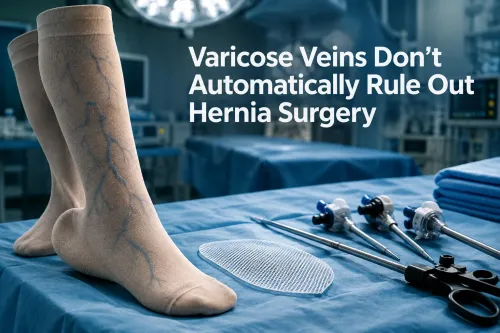

Visible, enlarged leg veins do not automatically rule out gynecological surgery, but they change the questions your surgical team must answer before admission. You will learn how clinicians distinguish ordinary varicose veins from possible clot symptoms, assess your individual risk, plan anaesthesia and compression, and decide when surgery needs further vascular or medical review.
Key takeaways
- Visible varicose veins alone do not automatically rule out gynecological surgery.
- Report previous clots, vein procedures, bleeding, and all medicines before surgery.
- Ask how your VTE risk will be assessed and how mobility will be protected.
- Seek urgent assessment for one-sided swelling, pain, warmth, or sudden breathlessness.
Do varicose veins make gynecological surgery unsafe?
Visible varicose veins do not automatically make elective gynecological surgery unsafe. The question of gynecological surgery for women with varicose veins in Pune should be settled through a formal venous-thromboembolism (VTE) and bleeding assessment, not by the appearance of the legs alone.
Superficial varicose veins are enlarged veins near the skin. They are not the same as deep-vein thrombosis (DVT), in which a clot blocks a deep vein, or pulmonary embolism (PE), in which a clot travels to the lungs. In the Caprini 2013 surgical risk model, varicose veins add one point.
The total risk can rise much more with:
- Older age or obesity
- Reduced mobility
- Cancer
- Previous DVT or PE
- Thrombophilia
- Pregnancy or childbirth within the previous six weeks
- Estrogen or other hormone therapy
- A long or major operation
Laparoscopic or robotic surgery may cause less tissue trauma and shorten recovery, but it does not remove VTE risk. Pneumoperitoneum, steep Trendelenburg positioning, prolonged operating time, cancer, and limited movement still affect clot risk.
The surgeon and anaesthetist decide whether to proceed and how to prevent clots after reviewing your history, medicines, bleeding risk, and procedure. A painful swollen leg, sudden breathlessness, chest pain, coughing blood, or fainting needs urgent medical assessment rather than routine surgical clearance.
Which leg findings need assessment before surgery?
Visible veins without pain or skin changes do not automatically require a Doppler ultrasound. Leg findings that need focused vascular or medical review before elective surgery include:
| Finding | Possible concern | Appropriate next step |
|---|---|---|
| Visible veins without symptoms | Superficial varicose veins alone | Disclose them; routine examination is usually enough |
| Skin ulcer, bleeding vein, or severe swelling | Significant venous disease or skin vulnerability | Arrange medical review before surgery |
| Painful, warm, red leg or tender superficial cord | Superficial thrombophlebitis; visual inspection cannot confirm its extent | Seek prompt assessment and ask whether duplex imaging is needed |
| Sudden one-sided swelling with calf pain | Possible deep-vein thrombosis (DVT) | Arrange urgent duplex ultrasound; postpone elective surgery until diagnosis and anticoagulation are settled |
| Previous DVT or pulmonary embolism | Higher recurrence risk | Obtain focused clotting and perioperative review |
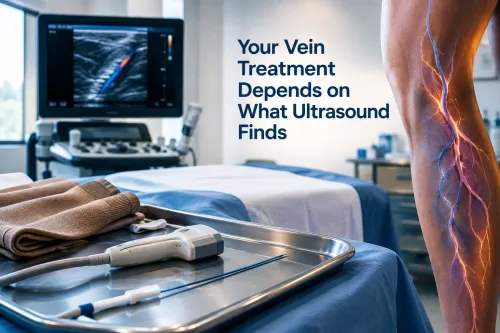
Duplex Doppler ultrasound measures blood flow, detects clot in deep veins, and evaluates venous reflux when symptoms or significant venous disease require investigation. It is not a universal test for every woman with visible veins, including those researching varicose veins in women in Pune.
Seek emergency care before or after surgery for sudden breathlessness, chest pain, coughing blood, fainting, or a rapid heartbeat. These symptoms can signal pulmonary embolism. Pregnancy and the first six weeks after childbirth also require obstetric and surgical assessment rather than routine advice for non-pregnant patients.
How do clot prevention and anaesthesia planning change?
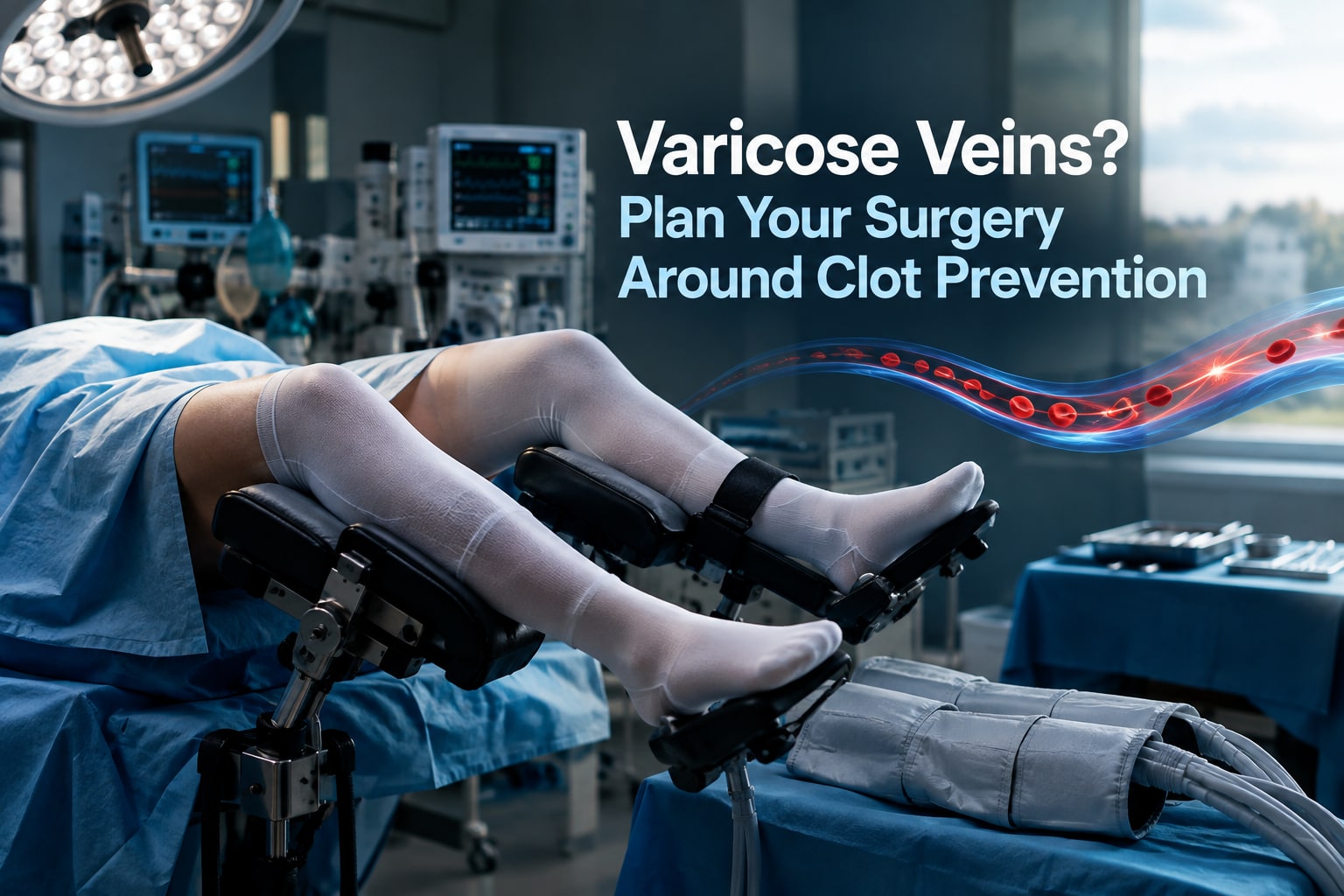
The plan starts on admission, with a review of your VTE and bleeding risks, an examination of both legs, and confirmation of the operation’s expected length. Open, laparoscopic, and robotic procedures still require planning for positioning, pneumoperitoneum, steep Trendelenburg, and reduced mobility; minimally invasive surgery does not remove clot risk.
- Ask when walking should begin and whether ankle pumps or other leg exercises are advised.
- Ask whether anti-embolism stockings or intermittent pneumatic compression will start on admission.
- Confirm that stockings fit safely; peripheral arterial disease, severe swelling, sensory loss, skin disease, ulcers, or an unsafe fit require another method or specialist advice.
- Ask whether low-molecular-weight heparin is planned, when it will start, and how long mechanical or anticoagulant prophylaxis will continue.
- Ask how spinal or epidural anaesthesia changes the timing of heparin doses.
For major gynecology surgery in Pune, NICE guidance supports mechanical prophylaxis on admission and low-molecular-weight heparin when clot risk outweighs bleeding risk. Pharmacological prophylaxis is specified for seven days; abdominal or pelvic cancer surgery can prompt consideration of 28 days. These are clinician-directed timeframes, not instructions to start medication yourself.
The surgeon and anaesthetist must coordinate every dose, particularly around neuraxial anaesthesia. Tell the team if a stocking causes pain, numbness, colour change, or skin damage, and seek urgent care for sudden breathlessness, chest pain, coughing blood, fainting, or new one-sided leg swelling and pain.
What must you disclose at the preoperative consultation?
Bring written details to your gynecological consultation in Pune; memory alone can miss a previous clot, medicine dose, or recent change. Use this numbered checklist:
1. Record any previous deep-vein thrombosis (DVT), pulmonary embolism, pregnancy-related clot, thrombophilia, vein procedure, or family history of clotting. Include smoking, obesity, cancer, limited mobility, current pregnancy, and childbirth within the previous six weeks.
2. Describe the planned operation: its name, whether it is open, laparoscopic, or robotic, expected duration, admission length, and whether cancer treatment is involved. Tell the team whether your varicose veins are only visible or cause swelling, pain, skin changes, or bleeding.
3. Bring every medicine and supplement list with the exact name, dose, and time taken. Include warfarin, apixaban, rivaroxaban, other anticoagulants, aspirin, combined contraceptive pills, estrogen therapy, fertility hormones, and compression stockings.
4. Do not stop, restart, or retime warfarin, apixaban, rivaroxaban, aspirin, or another anticoagulant yourself. The surgeon and prescribing clinician must coordinate the plan around bleeding risk, clot risk, and any spinal or epidural anaesthesia.
5. Tell the clinician about combined hormonal contraception or estrogen. These treatments can increase VTE risk, but stopping them alone can cause unintended pregnancy or worsen symptoms; the clinician decides whether to continue, pause, or substitute treatment.
6. Pregnancy and the first six weeks after childbirth require obstetric and surgical assessment, not routine elective-surgery advice.
What should you ask a Pune surgical team before deciding?
Consent for gynecological surgery for women with varicose veins in Pune should follow a procedure-specific VTE and bleeding assessment, not the appearance of the veins alone. A coordinated consultation is useful for gynecology surgery in Pune when the surgeon and anaesthetist review your legs, medicines, pregnancy status, operation, and recovery plan.
Pawar Surgical Hospital -Premier Surgical care center for gastroenerology, general surgery, laparoscopy, Urology and Gyenacology is worth considering only after you verify its urgent clot-evaluation and postoperative-monitoring arrangements. Women with varicose veins can often proceed when these risks are assessed before consent.
| Operation | What to clarify | Why it matters |
|---|---|---|
| Open | Expected duration, admission, and walking time | More tissue trauma and immobility can increase clot and bleeding concerns |
| Laparoscopic | Pneumoperitoneum, positioning, recovery, and prophylaxis | Smaller incisions do not remove VTE risk |
| Robotic | Operating time, Trendelenburg position, and mobilisation | A long procedure and reduced leg movement still require prevention planning |
Ask the team:
- What is my total VTE score and bleeding risk?
- Do my leg findings justify vascular review or duplex ultrasound?
- Are stockings safe for my circulation and skin, or will intermittent pneumatic compression be used?
- When will walking and leg exercises begin, and how long will admission last?
- What is the anticoagulant plan, its duration, and its timing around spinal or epidural anaesthesia? Do not change medication yourself.
- Which symptoms require immediate review? Sudden breathlessness, chest pain, coughing blood, fainting, or a newly swollen, painful leg requires emergency care, not routine follow-up.
Related products
Hernia Hydrocoele Abscees Diabetic foot Varicose vein Breast surgery Thyroid surgery Treatment for burns Cyst View product → |
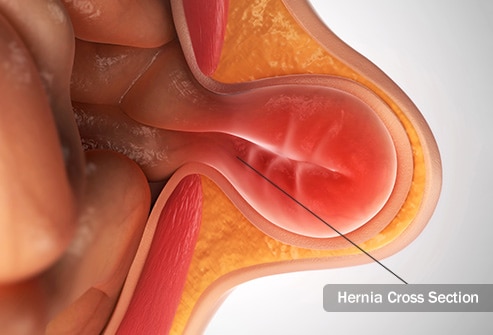 | Surgery Surgeries for congenital as well as adult type inguinal hernia, incisional hernia and hiatus hernia are performed. View product → |
Frequently asked questions
Do varicose veins make gynecological surgery unsafe?
No. Visible varicose veins do not automatically make surgery unsafe. Your team must assess venous-thromboembolism risk, bleeding risk, the planned procedure, anaesthesia, and recovery mobility.
Which leg findings need assessment before gynecological surgery?
Tell the surgeon about one-sided swelling, pain, warmth, skin colour changes, ulcers, bleeding veins, hard tender veins, or a past deep-vein thrombosis or pulmonary embolism. Sudden breathlessness or chest pain needs urgent medical care.
How do clot prevention and anaesthesia planning change?
The team may plan early walking, leg exercises, compression devices, stockings when appropriate, and medication based on your clot and bleeding risks. Anaesthesia planning also considers the operation, medical history, and medicines.
What must you disclose at the preoperative consultation?
Provide your history of varicose veins, clots, pulmonary embolism, vein treatment, abnormal bleeding, pregnancy-related clots, and family clotting disorders. List every medicine, including aspirin, anticoagulants, hormones, and supplements.
What should you ask a Pune surgical team before deciding?
Ask how they will assess VTE risk, whether you need a vascular or haematology opinion, which prevention measures apply, when you can walk after surgery, and how anticoagulants will be managed.
Related product
 | Endoscopy Gastroscopy Best Gastroscopy center in hadapsar. Gastroscopy done for following symptoms. |