
Visible varicose veins alone usually do not make laparoscopic gallbladder surgery unsafe, but they do require the surgical team to assess your overall risk of venous thromboembolism. By the end, you will know which vein problems need urgent review, what tests and medication questions to raise, how clot prevention works, and which warning signs require immediate help after surgery.
Key takeaways
- Ordinary superficial varicose veins do not automatically prevent gallbladder laparoscopy.
- Ask about your DVT and pulmonary embolism risk before surgery.
- Do not stop blood thinners without instructions from your surgeon and prescribing doctor.
- Report one-sided leg swelling, chest pain or sudden breathlessness immediately.
Do Varicose Veins Make Laparoscopic Gallbladder Surgery Unsafe?
Ordinary, soft, longstanding superficial varicose veins do not automatically make laparoscopy gallbladder surgery with varicose veins unsafe. The main concern is venous thromboembolism—deep-vein thrombosis (DVT) or pulmonary embolism (PE)—not bleeding from a visible surface vein. Varicose veins and laparoscopy can coexist safely when the legs and overall clot risk are assessed.
Risk changes when you have:
- Chronic venous insufficiency, ulcers, marked swelling, superficial thrombophlebitis, or a newly painful, hard, red vein.
- New one-sided leg swelling, unexplained calf pain, warmth, or significant asymmetry, which requires medical assessment before elective surgery.
- Previous DVT or PE, thrombophilia, active cancer, obesity, older age, hormone therapy, pregnancy or recent childbirth, or reduced mobility.
Chest pain, sudden breathlessness, coughing blood, fainting, or a rapidly worsening leg needs urgent medical attention rather than routine scheduling. The surgical team may also adjust clot-prevention measures after reviewing your history.
The reason for removing the gallbladder is assessed separately. Varicose-vein treatment is not normally required first, and asymptomatic gallstones do not justify surgery merely to coordinate procedures.
If gallbladder removal is indicated, the operation can still be converted to an open procedure when anatomy is unclear, inflammation or scarring is severe, or bleeding cannot be controlled safely. Varicose veins do not usually cause that conversion.
What Will the Preoperative Vein and Clot Assessment Include?
Before scheduling elective laparoscopic cholecystectomy, the team checks whether visible veins accompany active venous disease or added venous thromboembolism (VTE) risk.
1. Examine both legs for swelling, skin colour or texture changes, tenderness, hard veins, ulcers and left-right asymmetry. A new painful, red, firm vein or one-sided swelling needs assessment for thrombosis rather than routine scheduling.
2. Ask about previous deep-vein thrombosis (DVT), pulmonary embolism, superficial thrombophlebitis, clotting disorders, cancer, pregnancy or recent childbirth, hormone medicines, and how far you can walk. Review every medicine, including warfarin, apixaban, rivaroxaban, aspirin, clopidogrel, pain medicines and supplements.
3. Order blood tests when your history or examination makes them useful. These may include a complete blood count, kidney-function tests and coagulation testing. A duplex ultrasound is used when symptoms or examination suggest DVT or significant venous disease; visible varicose veins alone do not make it automatic.
4. Request vascular or haematology input for suspected active clot, recurrent thrombosis, known thrombophilia, severe venous disease or uncertainty about anticoagulation. Limited exercise tolerance or significant heart or lung disease also calls for cardiopulmonary assessment because it changes anaesthesia risk.
Ask: “What is my VTE risk?” “Do I need a leg ultrasound?” and “Who will manage my blood thinner?”
How Anaesthesia, Positioning and Pneumoperitoneum Affect Clot Risk
General anaesthesia removes normal movement and weakens the calf-muscle pump that helps return blood to the heart. Temporary immobility adds stasis, while carbon-dioxide pneumoperitoneum raises abdominal pressure and creates circulation and ventilation demands.
Laparoscopic gallbladder surgery is commonly performed head-up, often with a slight left tilt; this can alter venous return and blood pressure, so the anaesthesia team monitors breathing and circulation closely, especially with heart or lung disease or limited mobility.
Your prevention plan may include:
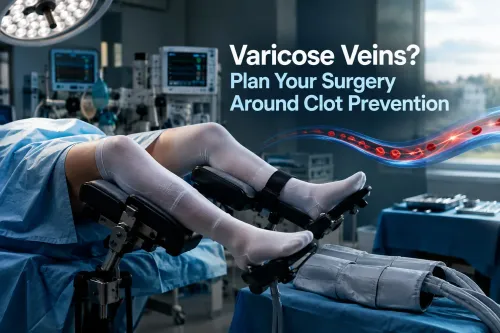
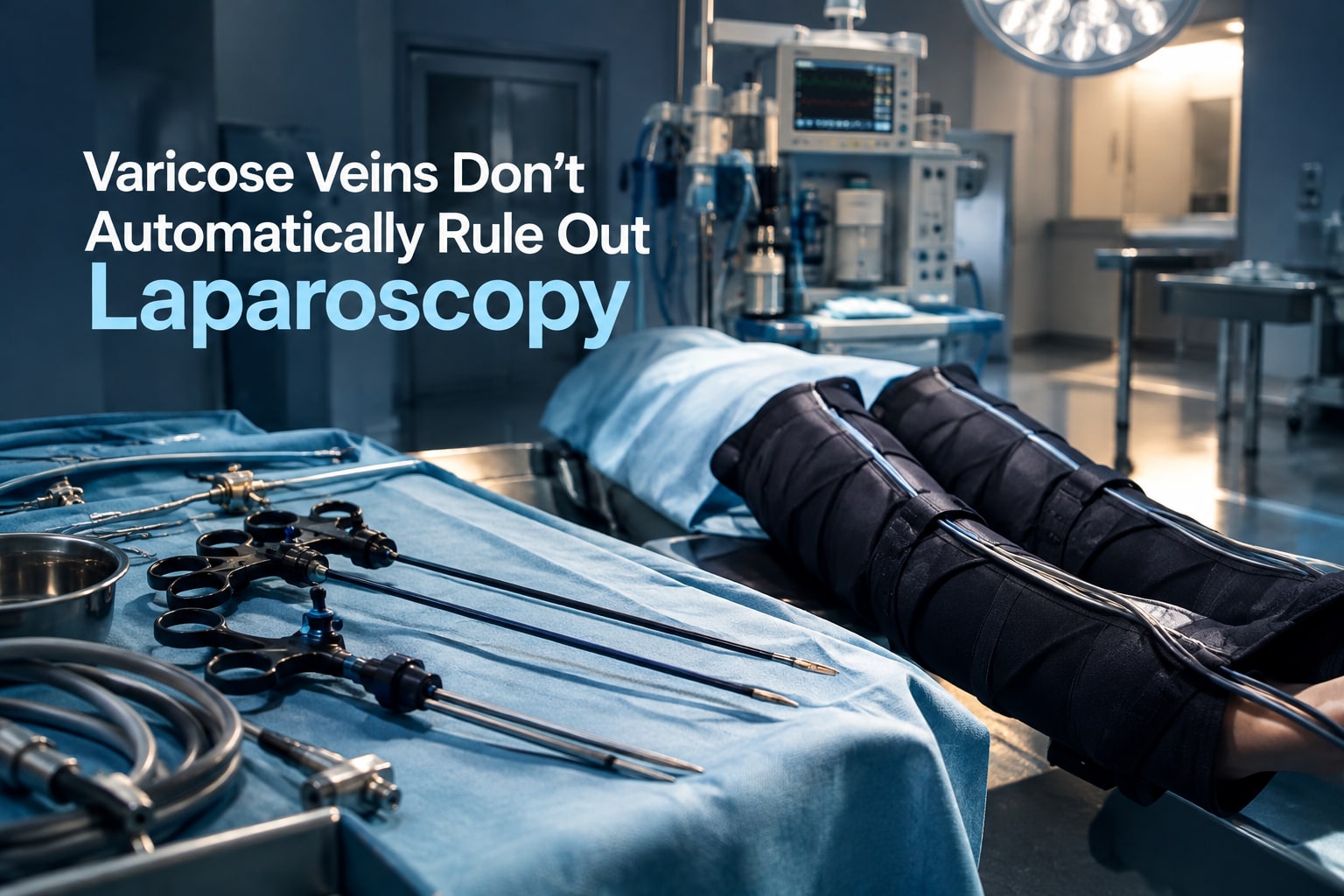
- Intermittent pneumatic compression during surgery and afterwards when appropriate. Inflatable sleeves rhythmically squeeze the legs; they are not the same as stockings.
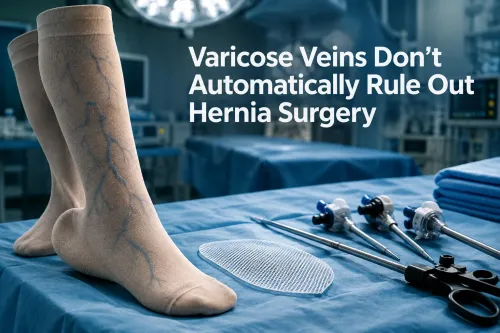
- Graduated compression stockings only after checking leg circulation and considering peripheral arterial disease. Correct sizing matters: a poorly fitted or unsuitable stocking can injure skin, create pressure points or impair blood flow.
- Adequate fluids when medically suitable, because dehydration can worsen sluggish circulation.
- Sitting up, standing and walking as soon as the clinical team permits. Small incisions do not remove clot risk.
Low-molecular-weight heparin or another pharmacological prophylaxis is considered only when the clinician judges your clot risk to outweigh bleeding risk. Varicose veins alone do not dictate an injection. The final plan balances your mobility, clot history, other risk factors, operation details and bleeding risk.
What Should You Do About Blood Thinners and Postoperative Symptoms?
Never stop or restart warfarin, apixaban, rivaroxaban, aspirin, clopidogrel or another anticoagulant or antiplatelet drug on your own. The surgeon and the clinician who prescribed it must agree on whether to interrupt treatment, whether heparin bridging is appropriate and when to restart it.
The plan depends on why you take the drug, kidney function, bleeding risk and the specific medicine.
Mild bruising after surgery or your usual rope-like surface veins do not prove deep-vein thrombosis. Contact the surgical team promptly or seek urgent assessment for:
- New swelling in one leg, especially if it is clearly larger than the other.
- Warmth, persistent calf or thigh pain, marked asymmetry or a rapidly worsening leg.
- A newly painful, red or hard vein rather than your usual painless varicosities.
Call emergency services for sudden breathlessness, chest pain, coughing blood, fainting or an unexplained rapid heartbeat. These symptoms can signal pulmonary embolism.
Before discharge, write down the answers to these questions:
- When can I sit up, walk and resume ordinary activity?
- How much fluid should I drink, and are there fluid limits?
- Which activities or lifting are restricted?
- How long should I wear compression stockings, if prescribed?
- Whom should I call outside routine follow-up if symptoms or bleeding develop?
Early walking helps prevent clots, but follow the team’s instructions rather than judging safety by the size of the incisions.
How to Choose Surgical Care in Pune When You Have Varicose Veins
Choose laparoscopic gallbladder surgery in Pune by the quality of the clot-prevention and bleeding plan, not by equipment or location alone. Ask a prospective gallbladder surgeon in Pune to document:
- Previous DVT or pulmonary embolism, superficial thrombophlebitis, clotting disorders, cancer, pregnancy or recent childbirth, reduced mobility and hormone medication.
- Every anticoagulant and antiplatelet medicine, including warfarin, apixaban, rivaroxaban, aspirin and clopidogrel.
| Care-plan question | What a clear answer covers |
|---|---|
| Who performs the assessment? | The clinician responsible for examining your legs and recording VTE risk |
| When is testing needed? | Duplex ultrasound for symptoms or abnormal findings; vascular input for suspected clot or severe venous disease |
| What compression will be used? | Correctly fitted intermittent pneumatic compression, with stockings only after circulation is checked |
| Is drug prophylaxis indicated? | A documented balance between clot risk and bleeding risk, rather than an injection solely because veins are visible |
| When will walking begin? | Sitting, standing and walking instructions before discharge, plus activity guidance at home |
The surgeon and anaesthesia team should agree before surgery on clot prevention, blood-thinner management and bleeding response. Request one emergency contact plan for new leg swelling, persistent calf pain, sudden breathlessness, chest pain, coughing blood or fainting.
A consultation at Pawar Surgical Hospital -Premier Surgical care center for gastroenerology, general surgery, laparoscopy, Urology and Gyenacology can help review the gallbladder indication, anaesthesia, medicines and mobility plan together in Pune. The key decision is whether your venous risk and prevention plan have been assessed—not whether every visible vein needs treatment first.
Related products
 | i.e removal of gall bladder for gall stones , acute acalculous cholecystitis, gall bladder polyps or gall bladder masses. View product → |
Laproscopy Laparoscopy with high definition HD laparoscopy system with high end equipment for all types of hernia, appendicitis, gall bladder and many other... |
Frequently asked questions
Do varicose veins make laparoscopic gallbladder surgery unsafe?
No. Soft, longstanding superficial varicose veins do not automatically make surgery unsafe. The team must assess your overall risk of deep-vein thrombosis and pulmonary embolism.
What will the preoperative vein and clot assessment include?
Your team will review the appearance and symptoms of the veins, previous DVT or pulmonary embolism, clotting conditions, mobility, obesity, cancer, pregnancy and medicines. They may order a leg Doppler ultrasound when symptoms or examination findings require it.
How do anaesthesia, positioning and pneumoperitoneum affect clot risk?
Anaesthesia reduces movement, the operating position can slow leg blood flow, and abdominal carbon dioxide pressure can affect venous return. Compression devices, early movement and an individual prevention plan help reduce risk.
What should you do about blood thinners and postoperative symptoms?
Give the surgeon a complete list of anticoagulants and antiplatelet medicines, and never stop them independently. Seek urgent care for sudden breathlessness, chest pain, coughing blood, fainting or new one-sided leg swelling and pain.
How should you choose surgical care in Pune when you have varicose veins?
Choose a centre that can assess clot risk, coordinate anaesthesia and surgery, plan thrombosis prevention, manage blood-thinner decisions and provide clear postoperative warning instructions.