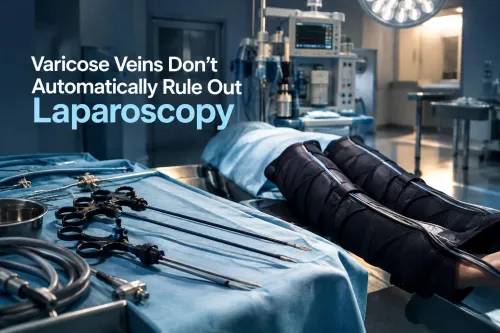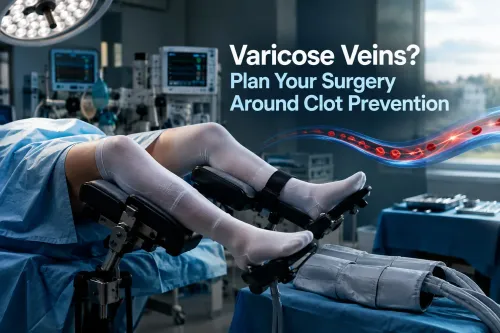

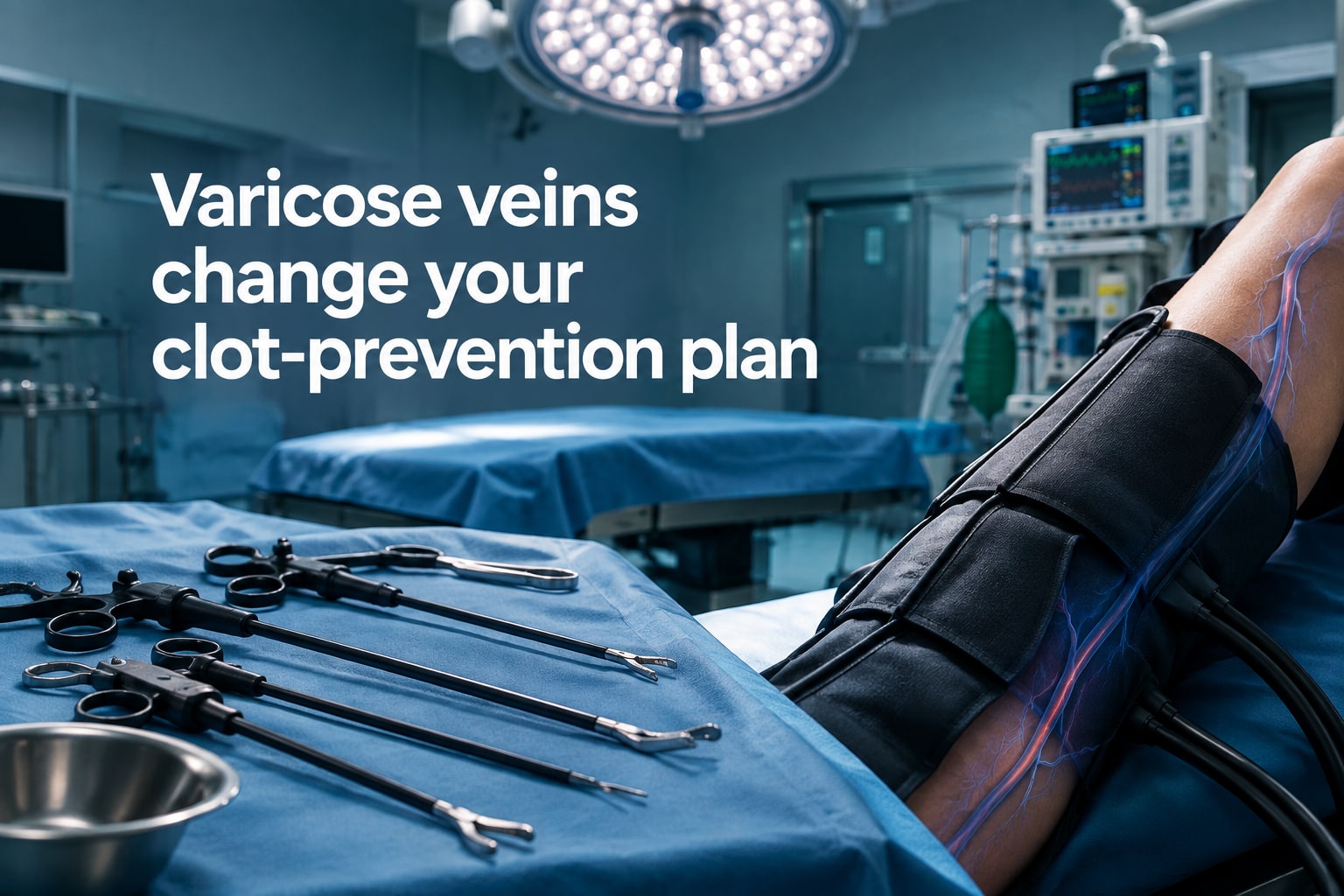
Varicose veins do not automatically prevent laparoscopic gallbladder removal, but they make your clot history, medicines, mobility and anaesthesia assessment important parts of the plan. You will learn how doctors decide whether surgery is appropriate, what happens in the operating room, how recovery is managed and which symptoms require urgent medical attention.
Key takeaways
- Confirm gallstones or inflammation with symptoms, examination and appropriate imaging.
- Tell the surgical and anaesthesia team about varicose veins, swelling and previous clots.
- Ask how compression, movement and blood-thinning medicine will reduce clot risk.
- Seek urgent review for jaundice, fever, worsening pain, breathlessness or leg swelling.
What happens before the operation, and how is gallbladder removal confirmed?
Removal is appropriate only when the diagnosis matches the symptoms and test results. During a cholecystectomy consultation in Pune, explain episodes of right-upper-abdominal pain after meals, nausea or vomiting, fever, jaundice, and pain radiating to the back. Leg swelling or vein pain is not evidence of gallbladder disease.
- The surgeon examines your abdomen for tenderness, guarding, a palpable mass and jaundice, then reviews the ultrasound. Gallstones, gallbladder-wall thickening, fluid around the gallbladder or a sonographic Murphy sign support acute cholecystitis; stones with typical biliary colic support elective removal. Pancreatitis, a growing polyp, or a suspected mass requires a separate plan.
- Blood work commonly includes liver-function tests, bilirubin, alkaline phosphatase, AST and ALT, a complete blood count, kidney function, electrolytes, glucose and clotting tests. Abnormal bile-duct results can prompt MRCP or endoscopic bile-duct treatment rather than immediate gallbladder removal.
- Review every medicine, including warfarin, apixaban, rivaroxaban, aspirin and supplements, plus allergies and previous anaesthetic problems. Anaesthesia assessment checks your heart, lungs, airway and fitness for general anaesthesia.
- Ask for the exact indication, whether observation or symptom-directed treatment is safer, and whether MRCP or intraoperative cholangiography is needed. The operation confirms safe anatomy by obtaining the critical view before dividing the cystic duct and artery; the removed specimen is examined by pathology. Suspected cancer or unsafe anatomy can require open surgery. For gallbladder surgery details in Pune, ask what happens if that view cannot be obtained.
How do varicose veins affect clot prevention and anaesthesia planning?
Visible varicose veins mark possible venous-thromboembolism risk, but they do not automatically prevent laparoscopic gallbladder surgery or require vein treatment first. Gallbladder removal and treatment of venous reflux, skin changes or ulcers are separate decisions.
Before surgery, disclose:
- Previous deep-vein thrombosis, pulmonary embolism or thrombophilia
- Leg swelling, venous ulcers or previous vein procedures
- Immobility, cancer, obesity, hormone therapy or limited exercise tolerance
- Heart or lung disease
- Warfarin, apixaban, rivaroxaban, dabigatran, aspirin or clopidogrel
Do not stop or restart any of these medicines independently. Your surgeon, anaesthetist and prescribing clinician must balance clotting risk against bleeding risk and create a specific plan.
Prevention may include early walking, adequate hydration, correctly fitted compression stockings, intermittent pneumatic compression and, when indicated, low-molecular-weight heparin. Walking does not replace prescribed medication. Compression stockings and pneumatic devices prevent clots; they do not remove varicose veins, and devices must not cover ulcerated skin.
Pneumoperitoneum from carbon dioxide and the head-up position used during laparoscopic gallbladder surgery with varicose veins in Pune can alter venous return and heart-lung function. Anaesthesia review therefore matters especially with prior clots, substantial venous disease, heart or lung disease, or poor exercise tolerance. Visible veins alone cannot determine your anaesthetic or clot-prevention plan.
What happens during laparoscopic gallbladder surgery, and when is open surgery safer?
1. You are admitted, checked, and kept fasting for the anaesthetic. The team confirms your medicines, allergies, identity and planned procedure, then starts an intravenous line.
2. General anaesthesia keeps you unconscious and pain-free. After you are asleep, the surgeon fills the abdomen with carbon dioxide to create working space and places several small abdominal ports for instruments and a camera.
3. The camera inspects the abdomen while the surgeon carefully exposes the gallbladder and nearby structures. Before clipping anything, the surgeon obtains the critical view of safety by clearing the hepatocystic triangle, separating the lower gallbladder from the liver, and confirming that only the cystic duct and cystic artery enter the gallbladder.
4. The surgeon clips and divides the cystic duct and cystic artery, then separates the gallbladder from the liver bed. The gallbladder comes out through a port, and the small incisions are closed with sutures, adhesive or staples.
5. Severe inflammation, scar tissue, bleeding, unusual anatomy, suspected bile-duct injury or possible cancer can make laparoscopic dissection unsafe. The team may obtain additional imaging, perform a subtotal cholecystectomy, or convert to an open cholecystectomy through a larger incision.
Conversion is a safety decision, not automatically a complication or evidence of poor surgery. During a laparoscopic gallbladder procedure in Pune, ask what the surgeon will do if the critical view cannot be obtained and whether bile-duct imaging is planned.
How long do admission, discharge and normal recovery take?
The operation commonly takes 60 to 90 minutes. Inflammation, adhesions, obesity, previous upper-abdominal surgery or bile-duct evaluation can extend that time. Your arrival-to-discharge time also includes admission, fasting checks, anaesthesia preparation and recovery-room observation.
After anaesthesia, staff monitor your breathing, pain, nausea, bleeding and ability to walk. Same-day discharge or one overnight stay depends on drinking without repeated vomiting, urinating, walking safely, controlled pain and reassuring examination findings—not simply on the clock.
During the first days, expect incision soreness, shoulder-tip pain from residual carbon dioxide, fatigue and occasional nausea. Temporary loose stools or intolerance of fatty foods can occur. Keep dressings and incisions clean and dry as instructed, and do not pick at stitches, glue or other closures.
- Drive only after sedating pain medicine has stopped and you can turn, react and brake safely without significant pain.
- Bathe only according to your wound instructions; do not soak incisions until the surgical team permits it.
- Return to desk work when your energy and pain allow, often after several days to a couple of weeks depending on the job.
- Resume walking gradually, then increase exercise in stages. Avoid heavy lifting until the surgical team permits it.
If you are seeking gallbladder surgery details in Pune, ask for written instructions covering work, driving, bathing, exercise and wound review. Recovery varies when the operation becomes more complex, so your surgeon’s restrictions take priority over general timelines.
Which symptoms need urgent review, and what should you ask at a Pune consultation?
Incision soreness, shoulder-tip pain from carbon dioxide, fatigue, mild nausea and temporary loose stools can occur after laparoscopic cholecystectomy. These effects should gradually improve, not intensify.
| Symptom | What to do | Why it matters |
|---|---|---|
| One-sided calf swelling, pain, warmth or redness | Seek urgent medical assessment | Possible DVT needs examination and testing |
| Sudden breathlessness, chest pain, coughing blood, fainting or unexplained rapid heartbeat | Seek emergency care immediately | These symptoms can signal pulmonary embolism |
| Fever, jaundice, dark urine, pale stools, persistent vomiting or increasing abdominal pain | Contact the surgical team promptly | Infection, bile leakage or a retained duct stone needs review |
| Wound redness or drainage | Contact the surgical team promptly | The incision may be infected |
Do not assume leg symptoms are “just varicose veins,” and do not diagnose a clot at home. The phrase laparoscopic gallbladder surgery with varicose veins in Pune describes two separate issues: gallbladder removal does not treat venous reflux, ulcers or cosmetic veins.
At a cholecystectomy consultation in Pune, Pawar Surgical Hospital -Premier Surgical care center for gastroenerology, general surgery, laparoscopy, Urology and Gyenacology is one local option for discussing:
- What is the confirmed indication?
- What happens if the critical view cannot be obtained?
- Is bile-duct imaging needed?
- What is the anticoagulant and VTE-prevention plan?
- Which warning signs require emergency care?
Related items
 | i.e removal of gall bladder for gall stones , acute acalculous cholecystitis, gall bladder polyps or gall bladder masses. View product → |
Laparoscopy Laparoscopic apendicectomy Laparoscopic cholecystectomy Laparoscopic Hiatus Hernia Laproscopic Inguinal Hernia Laparoscopic Umbilical Hernia... View service → |
Frequently asked questions
How is gallbladder removal confirmed before laparoscopic surgery?
The surgeon matches your symptoms with examination findings and test results, often including an abdominal ultrasound and blood tests. Right-upper-abdominal pain after meals, nausea, vomiting, fever or jaundice can support the diagnosis; leg swelling or vein pain does not.
How do varicose veins affect gallbladder surgery planning?
Tell the team about visible varicose veins, one-sided leg swelling, previous deep-vein thrombosis, pulmonary embolism and current medicines. They can plan clot prevention with early walking, leg compression and blood-thinning medicine when indicated, while the anaesthetist reviews your overall risk.
When is open gallbladder surgery safer than laparoscopy?
The surgeon may recommend an open operation when severe inflammation, dense scar tissue, bleeding, unclear anatomy or suspected injury makes keyhole dissection unsafe. The decision can also change during surgery if visibility or bleeding control becomes difficult.
How long do admission and recovery take after laparoscopic gallbladder surgery?
Many patients leave the hospital the same day or after overnight observation, depending on pain control, nausea, eating, walking and medical risks. Light activity usually resumes first, while strenuous work and lifting wait for the surgeon’s instructions.
Which symptoms need urgent review after gallbladder surgery?
Seek urgent medical advice for worsening abdominal pain, persistent vomiting, fever, yellow skin or eyes, increasing wound redness or discharge, faintness, breathlessness, chest pain, or new one-sided leg swelling and pain.
Related items
Laproscopy Laparoscopy with high definition HD laparoscopy system with high end equipment for all types of hernia, appendicitis, gall bladder and many other... |
 | Nissan's Fundoplication Appendectomy, Cholecystectomy, Inguinal Hernia, Incisional Hernia, Hiatus Hernia, Hysterectomy, ectopic pregnancy, ovarian tumors, PCOD, Diagnostic... View product → |
Hernia Hydrocele Debridement Varicose veins Varicocele Lipomas Lymphnode All lumps and bumps View service → |
 | Surgery Gynecology Many females start suffering from excessive P/V bleeding due to various reasons. |